
Access El Paso County People Search
El Paso County people search records are kept at the County Clerk's office and the District Clerk's office in the city of El Paso. The county sits at the far western tip of Texas along the Rio Grande and shares a border with New Mexico and Mexico. More than 860,000 people live here. The county covers the city of El Paso and smaller communities like Socorro. Public records span court filings, property transactions, vital records, and assumed name certificates. Many of these records can be searched online, while others require an in-person visit to the courthouse.
El Paso County Overview
El Paso County Clerk
The El Paso County Clerk's office is the main place for people search records that involve property, vital records, and business filings. The office records real property documents like deeds, liens, and releases. It issues marriage licenses and vital records including birth and death certificates. Assumed name filings are also here. If you need to find records on a person in El Paso County, the clerk's office is a solid starting point.
Under Texas Government Code Chapter 552, the public has a right to access government records. The El Paso County Clerk must make records available for inspection and copying. Standard copy fees under Section 552.261 are $0.10 per page. The county website also notes that translation services are available and provides a Title VI/ADA coordinator contact at (956) 292-7655 for accessibility needs.
| Office | El Paso County Clerk |
|---|---|
| Address |
500 E. San Antonio Avenue El Paso, TX 79901 |
| Website | epcounty.com - County Clerk |
The screenshot below shows the El Paso County main website portal where you can navigate to various county departments and services.
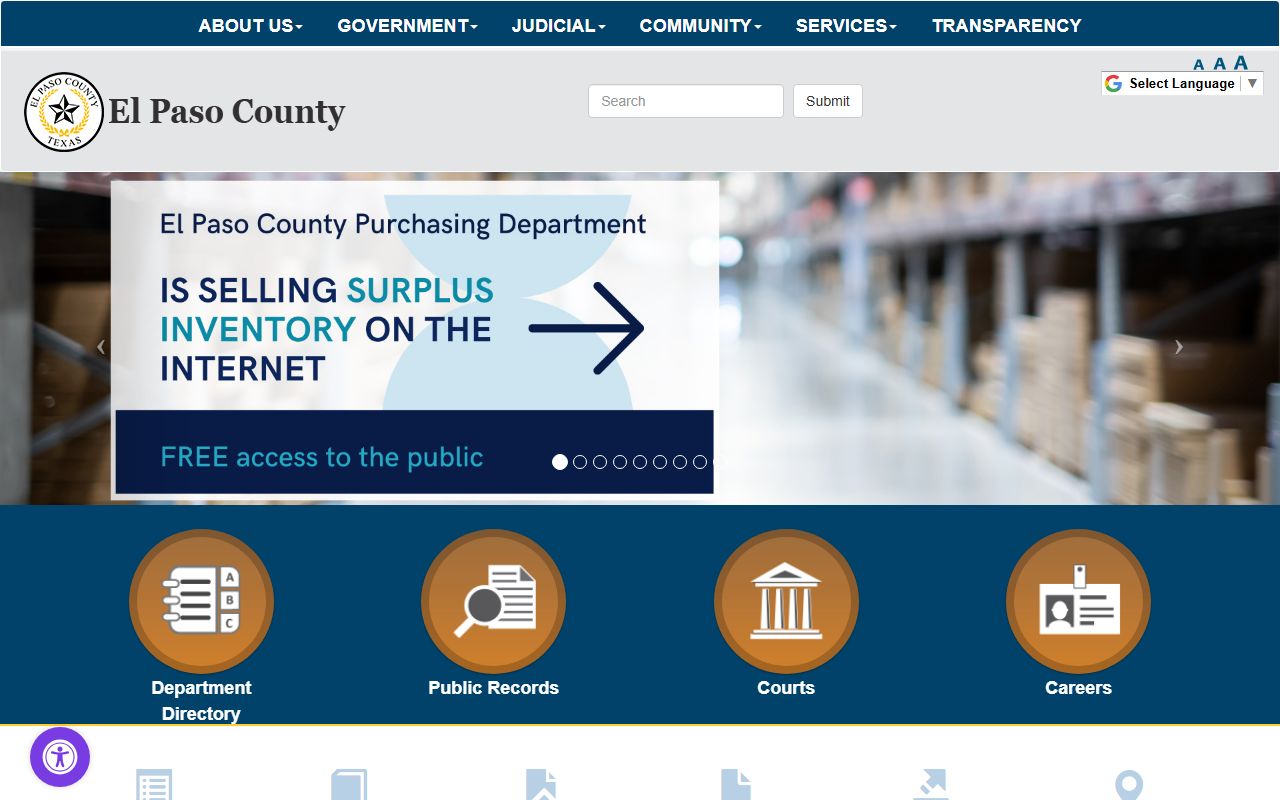
The portal links to the County Clerk, District Clerk, tax office, and other departments that hold public records.
How to Search for People in El Paso County
Running a people search in El Paso County takes a few steps depending on what you need. Court records, property data, and vital records are each in different places. The good news is that most offices have some level of online access. You don't always have to make the trip to the courthouse.
For court records, the El Paso County District Clerk has an online case lookup. It covers criminal, civil, and family cases. You search by party name or case number. The results show basic case information, parties involved, and case status. This is one of the most useful tools for a people search because court records often contain addresses, dates of birth, and other identifying details.
Property records are at the El Paso Central Appraisal District (EPCAD). You can search by owner name, property address, or account number. The system shows tax values, homestead exemptions, and property descriptions. There is also a GIS mapping tool. Property records tie a person to a specific address, which makes them valuable in a people search.
Here is a look at the El Paso CAD property search system.

The EPCAD site gives you access to ownership data, tax history, and parcel maps for any property in the county.
Section 552.021 of the Government Code says you have a right to access public information. The county offices must let you look at records and get copies. If a request is denied without a proper exemption, Section 552.353 provides for penalties against the responsible employee. You can also file a complaint with the Texas Attorney General.
People Search Record Types
El Paso County holds several categories of records that come up in people searches. Each type is managed by a different office. Knowing which one to contact saves you time and gets you to the right records faster.
Common record types available in El Paso County:
- Criminal and civil court case records
- Real property deeds, liens, and mortgage filings
- Marriage licenses and other vital records
- Assumed name (DBA) certificates
- Property tax values and ownership history
- Inmate records and active warrants
Most of these records are public under Texas law. Birth records have limits though. Health and Safety Code Chapter 191 restricts who can get certified copies of birth certificates. Only the person named, a parent, a legal guardian, or someone with a court order can get one. Death records and marriage records have fewer restrictions. For any public record, the clerk's office must respond to your request within a reasonable time frame.
El Paso County Court Records
Court records are central to most people searches. El Paso County has a full court system with County Courts at Law, District Courts, and Justice of the Peace courts. The District Clerk manages records for district-level cases. These include felonies, family law, and civil cases above a certain dollar amount. County Courts at Law handle misdemeanors and smaller civil matters.
The District Clerk's online case lookup is the go-to tool. Search by name or case number. It is free and works from any computer or phone. Case results show the type of case, filing date, and current status. For detailed documents, you may need to request copies in person or by mail.
Criminal background information is also available at the state level. The Texas DPS criminal history search covers arrests and convictions across Texas. There is a small fee for a name-based search. The DPS sex offender registry is free and shows registered offenders by name or location. For anyone serving time in a state prison, the TDCJ inmate search is the tool to use.
The El Paso County Sheriff's office runs its own inmate search for people in the county jail. It also posts warrant information. These are real-time tools and good for checking someone's current custody status. The Texas Courts portal connects to statewide case data and court resources.
Property and Vital Records
Property records in El Paso County can reveal a lot about a person. They show ownership, sale history, and current tax values. The County Clerk records deeds, liens, and other property documents. The EPCAD maintains the appraisal data. Between these two sources, you can build a detailed picture of someone's real estate holdings in the county.
Vital records round out a people search with personal details. The El Paso County Clerk issues birth and death certificates and marriage licenses. Marriage records are public and often used to confirm relationships or name changes. Birth records carry stricter access under Health and Safety Code Chapter 191. The Texas Vital Statistics unit provides a statewide backup if the local office cannot fulfill your request.
For business-related lookups, SOSDirect is the Secretary of State's tool for searching corporations, LLCs, and other business entities. It can tell you who runs a company or when it was formed. The voter registration lookup is another way to confirm a person's name and county of residence. And the Texas Comptroller handles tax account data that may be tied to a person or business.
Legal Help in El Paso County
If your people search connects to a legal issue, El Paso County has resources. The State Bar of Texas lawyer referral service can help you find an attorney in El Paso. You can search by location and practice area. Legal aid organizations in the El Paso area serve residents who qualify based on income.
The Texas Courts website posts self-help guides and court forms that anyone can download for free. These cover common legal procedures and can help if you need to file a records request or take legal action based on what your people search turned up. The El Paso County website also has information about ADA accommodations and translation services for residents who need them.
Cities in El Paso County
El Paso County is home to the city of El Paso and surrounding communities. County records for all these areas are filed at the courthouse in El Paso.
Nearby Counties
El Paso County sits at the far western edge of Texas. It borders Hudspeth County to the east and shares international borders with New Mexico and Mexico. No adjacent Texas counties with dedicated pages are nearby, but you can browse all counties from the main counties page.